The answer to that depends on whether the globe is able to contain the virus spread, says Samie Modak.

'Investing in the stocks of holdcos can be a very efficient and inexpensive way of gaining exposure to the stocks of India's reputable growing business houses.'

Though a weak dollar will lend some support to revenues and margins in FY21, the demand environment will outweigh any gain.

Small stocks of Dalal Street grappled with turbulent times in 2022 as high volatility and higher interest rate regime sapped investors' appetite for these scrips but the horizon ahead seems less cloudy for the New Year. While the 30-share Sensex scaled multiple record peaks with bluechips glittering, small stocks underperformed and the BSE smallcap index declined more than 3 per cent this year. In comparison, the BSE Sensex climbed 2,673.61 points or 4.58 per cent till December 27.

A new generation of investors has taken to stock trading on mobile phones with a renewed zeal, driven mainly by social changes after the Covid-19 pandemic breakout. The proportion of the cash market turnover ascribed to mobile phones has jumped from 5.3 per cent in June 2019 to 18.7 per cent in June this year, reveals BSE data. The share of mobile trading on the National Stock Exchange (NSE) for June this year stood at 19.5 per cent.

Morgan Stanley removed banking stocks from its model portfolio when it slashed its weighting on the sector by 500 basis points. Several foreign brokerages, such as UBS, JP Morgan, and Credit Suisse, of late, have also become less optimistic about banking stocks.

The economy is expected to throw up better numbers in the September quarter with GDP contraction of 9.9 per cent, as against 24 per cent in Q1 at the onset of the pandemic, says a report. The government will release the Q2 GDP numbers later this month. In the first contraction since 1980, the economy shrank a full 23.9 per cent in the first quarter of the fiscal after the whole nation was put under a strict lockdown.

Analysts mostly prefer domestic plays beside select films with foreign exposure.

'India has entered an economic super-cycle driven by a housing cycle turnaround.'
With the O2C business outlook on the mend, the Street is also looking forward to news on RIL's proposal to sell up to 20 per cent of the O2C business to a strategic investor like Saudi Aramco.

While the collapse of a large financial intermediary can wreak havoc on the system because of the interconnectivity, a large business conglomerate too can play spoilsport if the banks have too much exposure to the entity, explains Tamal Bandyopadhyay.
The Reserve Bank is likely to maintain status quo on interest rates in its forthcoming monetary policy review but may change the stance in view of retail inflation piercing its upper tolerance limit, global uncertainties created by the ongoing Russia-Ukraine war, and the urgency to protect and boost growth, feel experts. The RBI governor-headed rate setting panel -- Monetary Policy Committee (MPC) -- will be holding its first meeting of the 2022-23 fiscal from April 6 to 8. The outcome will be announced on April 8.

'The correction could take two to three months and traders need to be careful.' 'For investors, this could be a good time to nibble in.'

Reliance-Google's new smartphone has got mixed reviews from analysts and brokerages. The phone pricing is seen unattractive for low-end customers and bundled offers are being viewed as non-disruptive. While this could slow the pace of adoption, it could set the stage for tariff hikes in the industry, feel analysts.
The Reserve Bank may be hitting the end of its tolerance for high inflation and will most likely hike interest rates in the first half of 2022, analysts said on Friday. The central bank will also start rolling back its accommodative policies which have led to easy liquidity conditions, they said. The view from analysts came even as inflation cooled down to 5.6 per cent for July, after two months of breaching the upper end of the RBI's tolerance band of 6 per cent.

The FPI holding in India's top 100 companies, which are part of the Nifty 100 index, declined to 24.23 per cent on average at the end of March this year, from a high of 27.5 per cent at the end of March 2021. This is the lowest FPI holdings in India's top listed companies in at least three years. A general sell-off by FPIs has weighed on stock prices and the benchmark S&P BSE Sensex is down 8.5 per cent, from its 52-week high made in October 2021. Most analysts expect FPI flows to remain weak in FY23 as well, given rising bond yields in the US and an expected earnings slowdown in India due to high inflation and commodity prices.

'We continue to believe that the global economy will narrowly avoid a recession, despite expecting the US, Canada, and most of Europe to fall into recession at some point over the next year or so.'
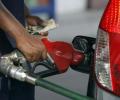
Petrol and diesel prices, which have been on a freeze for the past four months in view of assembly elections in states like Uttar Pradesh, need to be increased by over Rs 12 per litre by March 16 for fuel retailers to break even. International crude oil prices shot above $120 a barrel for the first time in nine years on Thursday before retreating a little to $111 on Friday, but the gulf between cost and retail rates has only widened. With international oil prices - on which domestic fuel retails are directly benchmarked - spiking in the last two months, state-owned fuel retailers "need a massive price hike of Rs 12.1 per litre on or before March 16, 2022, just to breakeven and a price hike of Rs 15.1 is required" after including margins for oil firms, ICICI Securities said in a report.

These include increasing the public float in listed companies to 35 per cent from 25 per cent, increasing the minimum statutory limit for FPI investment in a firm from 24 per cent to the sectoral foreign investment, and lowering government holding in listed public sector undertakings.

One Rank One Pension (OROP) will have a significant impact on the country's fiscal bill and the overall cost will be around Rs 16,000 crore.

Petrol and diesel price hikes are likely to resume after state elections get over next week to bridge the Rs 9 a litre gap created by international oil prices soaring past $100 a barrel. International crude oil prices shot above $110 a barrel for the first time since mid-2014 on fears that oil and gas supplies from energy giant Russia could be disrupted, either by the conflict in Ukraine or retaliatory western sanctions. The basket of crude oil India buys rose above $102 per barrel on March 1, the highest since August 2014, according to information from the Petroleum Planning and Analysis Cell (PPAC) of the oil ministry.

Rising prices of international coal - both coking and thermal - used in the making of ferrous and non-ferrous metals, respectively, are expected to have an impact on margins of metals companies in July-September quarter (Q2) as steel companies may see margins getting eroded, while the base firms could stand to benefit, said brokerages.
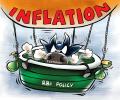
Analysts say RBI will cut rates because the liquidity crunch that began this time last year is still hurting the economy and also with an eye on the August industrial production numbers, which showed a contraction by 1.1 per cent -- the steepest in seven long years.

The order, a "negative" overall, will be a short term positive for corporate focused state-run and private lenders because of the possibility of delaying incremental stressed asset recognition.

'In the overall global portfolio, India's weighting has come down in the past seven months.'
Channel partners have started adding more value in marketing and sales. They are increasingly acting as advisors -- sales professionals than brokers.

Reliance Industries Ltd's focus on the next hypergrowth opportunities in clean tech and its path to decarbonisation has the potential to spur re-rating, raises clarity on investment cycles and reduces investor worry, brokerages said. RIL chairman Mukesh Ambani at the company's 'Green AGM' on Thursday committed Rs 75,000 crore over the next three years to set up an integrated Green Energy Giga Complex across 5,000 acres in Jamnagar, Gujarat which will contain four giga factories. The complex, which would be one of the world's largest renewable manufacturing facilities, would have an integrated solar photovoltaic module factory, an energy storage battery factory, electrolyser manufacturing for hydrogen production, and manufacturing of fuel cells so that hydrogen can be used in transportation.

It is the biggest issue we have ever faced in the securities market, where a sensitive and systemically important institution and first-line regulator was not only exploited by unscrupulous elements but functioned like a private fief, points out Debashis Basu.

Fitch Ratings has cut India's economic growth forecast to 8.7 per cent for the current fiscal but raised GDP growth projection for FY23 to 10 per cent, saying the second COVID-19 wave delayed rather than derail the economic recovery. In its APAC Sovereign Credit Overview, Fitch Ratings said India's 'BBB-/Negative' sovereign rating "balances a still-strong medium-term growth outlook and external resilience from solid foreign- reserve buffers, against high public debt, a weak financial sector and some lagging structural factors". The 'Negative' outlook, it said, reflects uncertainty over the debt trajectory following the sharp deterioration in India's public finances due to the pandemic shock.

Sebi also plans to examine if any comments made by company officials or the bankers could have misled investors.

Over the next three - six months, UBS believes earnings will be the main driver for EM equities outperformance.

The wide-based NSE sensitive index is currently hovering around 7,900.

Average policy rate over the next three years should be around 7.4%
The imported inflation component is also expected to ebb on lower oil prices and softer US dollar, it said.

Infosys has has the highest proportion of non-independent directors on its board.

Investors need to evaluate the offerings of a broker in totality before selecting one.

JSW had moved competition watchdog alleging Asian Paints threatened various dealers from dealing with the company.

Brokerage firm CLSA says in its interactions with government officials, measures such as the dollar-deposit scheme were under consideration.

Fitch Ratings on Wednesday cut India's growth forecast to 10 per cent for the current fiscal, from 12.8 per cent estimated earlier, due to slowing recovery post second wave of COVID-19, and said rapid vaccination could support a sustainable revival in business and consumer confidence. In a report, the global rating agency said the challenges for banking sector posed by the coronavirus pandemic have increased due to a virulent second wave in the first quarter of the financial year ending March 2022 (FY22). "Fitch Ratings revised down India's real GDP for FY22 by 280bp to 10 per cent, underlining our belief that renewed restrictions have slowed recovery efforts and left banks with a moderately worse outlook for business and revenue generation in FY22," it said. Fitch believes that rapid vaccination could support a sustainable revival in business and consumer confidence; however, without it, economic recovery would remain vulnerable to further waves and lockdowns.

Very gradual fiscal consolidation glide path with looser-than-expected fiscal policy; good quality spending mix and reasonable assumption on fiscal math; and focus on privatisation, asset monetisation and long-term funding for infrastructure investments, according to Morgan Stanley, are the three key themes from the Budget 2021.
